
Beginner Spanish
Unlearning perfectionism in midlife

In the cobblestoned maze of San Sebastián’s Old Town, once we find the street that connects the city’s two cathedrals, we can always find our panadería. Returning to this bakery we discovered 14 years ago on our honeymoon is a pilgrimage of sorts. For my husband, because it sells his favorite baked good in all the world: a perfectly buttery yet fluffy chocolate brioche bun. For me, because after six months of relearning Spanish, I was about to finally try it out in the wild.
We’d arrived in northern Spain by train the night before from Paris, and as we neared the front of the panadería’s out-the-door, down-the-street line, I practiced my script in my head. Just simple food ordering, Spanish 101. A beaming woman in a matronly full-bosomed apron established eye contact. My moment had come.
“Tres txokos,” I said, pointing to the tidy row of chocolate brioches. (I love the charming Basque “tx”— who says the “ch” sound can’t be represented by a different letter pair?)
“Tres?” she confirmed with three fingers. So far so good—but then out slipped a “Oui.” And before I could process my linguistic stumble, she was handing over the pastry bag and I was saying “Merci,” even though my mind was shouting Gracias! Gracias!
The woman moved to the register as if nothing was amiss, switching to basic French. Deflated by my failure, at least I’d succeeded in masquerading as a non-English speaker. (Passing as Not American while traveling is one of my favorite things. Our reputation tends to precede us.)


Returning to Spanish was part of my New Year’s intention of rediscovery last year. Instead of a resolution to take up something new, be someone new, I decided to invest my minimal free time into reviving dormant parts of myself. (New year, old me.) I registered for a weekly class and became quickly obsessed with my new Spanish habit. I listened to Spanish podcasts while I walked my dog, crooned along to Shakira and Julieta Venegas on my runs, and checked out Spanish picture books from the library “for my kids.” (Peppa Pig, written almost exclusively in present tense, is my sweet spot.)
Something just clicked. I don’t mean that it all came rushing back, but that my mind felt satisfied, invigorated in a way it hadn’t for some time. Writing is fulfilling and mentally stimulating too, but the moments of success or progress are fewer and farther between than the almost immediate gratification of learning to conjugate a new verb tense or remembering a random word learned decades ago, the rush of conducting a successful one-minute conversation in a non-native language. Most of all, instead of trying to achieve some vague degree of perfection as I do when I write, my mind felt free to play. To roam. To breathe.
The only measure of success that I assigned myself was to be confident enough by our summer trip to Spain to simply speak Spanish with Spaniards. To tamp down my lifelong perfectionism enough to make mistakes. So really, my botched bakery conversation was a fitting way to break the ice. I would not try to feign fluency. I would be absolutely transparent about my non-expertise.
By the end of our first day in San Sebastián my brain had acclimated, and after successfully ordering dinner for my family, I remembered my mission to converse. “Estoy estudiando Español!” I announced to the waitress. She nodded. This was probably quite clear to her already. “¿Cómo se dice esto?” I asked eagerly, pointing to a straw. (When at a loss for conversation topics, I recommend asking how to say something.)
“Pajito,” she said. And then with a smile, “En Inglés?”
“Straw,” I told her. It wasn’t as if we’d connected on some profound level. We were just two adults learning the word for straw. But I saw the flicker in her eyes too — the thrill of being a beginner.
//
As I attended my Friday morning class and the weeks turned into months, I came to realize what I really loved about my renewed Spanish habit. When I entered the classroom, I put on a different persona. She was a brazen beginner. Gregarious and unfiltered. She volunteered to be the first Taboo victim, to read her dialogue about inviting someone to a party. She asked every question that popped into her head, unashamed by what she didn’t know. In many ways, she was my opposite. At a time when I am striving to be the best I can in most every other area of life—a flawless mother, a stronger runner, a successful writer—it is exhilarating to not attempt perfection or expertise. I left each class aglow in the simple joy of learning, without the pressure of accomplishment. Electrified by the freedom of beginnership.
Technically, I am not a true beginner. I took Spanish in high school, a semester or two in college, and a crash-course refresh with my husband while traveling around South America. I’ve swept the cobwebs off every few years for a trip to Mexico or Spain, but the effort has never been sustained. The cobwebs always return. Dust accumulates. Rust hardens.
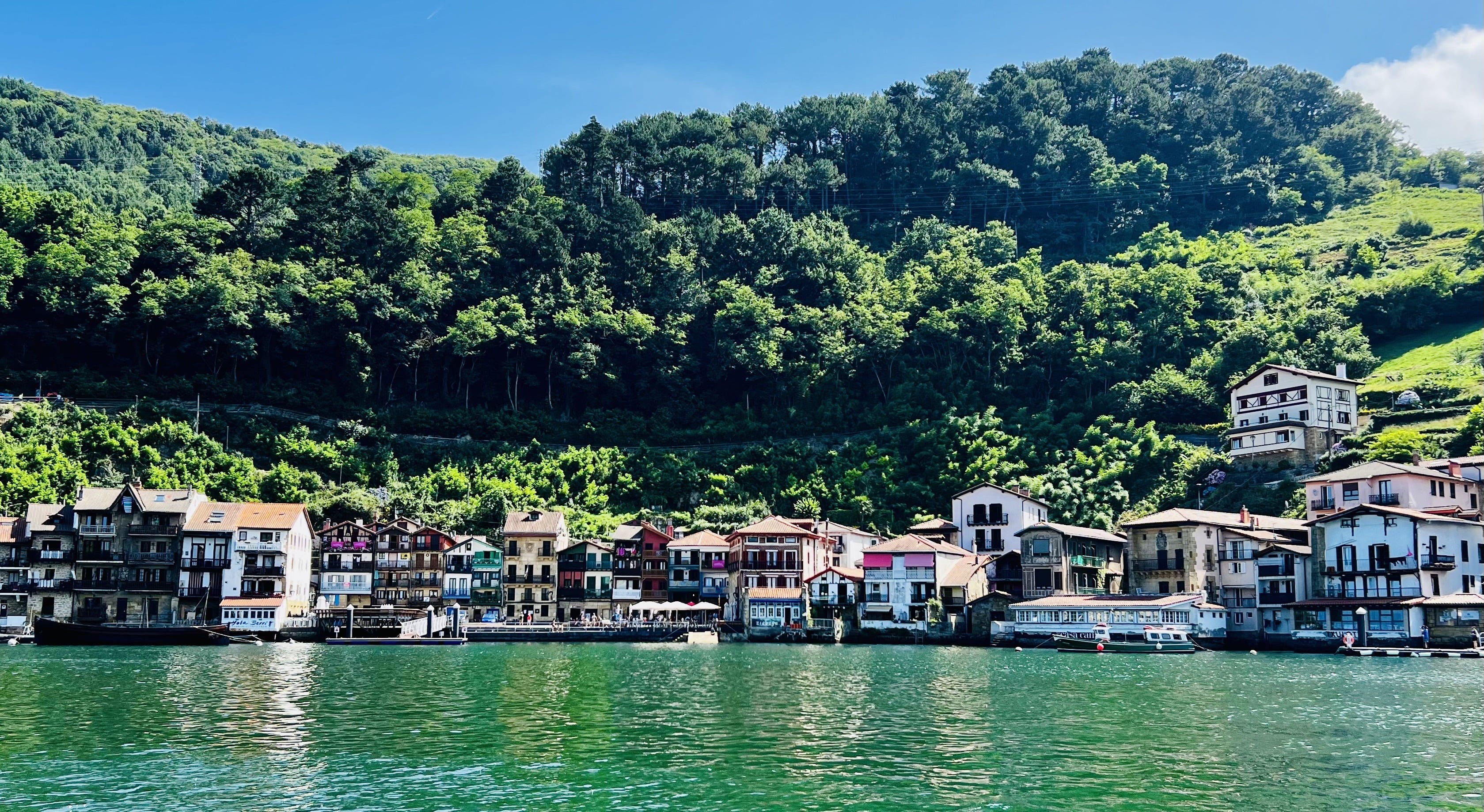
Halfway into our week in San Sebastián, we set off on another pilgrimage. The rain on the bus ride cleared as we boarded the water taxi for the 90-second trip to Pasaia, a small fishing village where my husband and I took a cooking class as newlyweds. The restaurant is still there, but more importantly, so is the chef who taught us to make a tuna carpaccio. We sat under an umbrella at the edge of the village square. My daughter ate nearly an entire monkfish on her own. My son, in true preschooler fashion, merely nibbled a baguette. I tried a mussel—mejillon, a delicious word—for the first time in my life, breaded, fried and spicy.
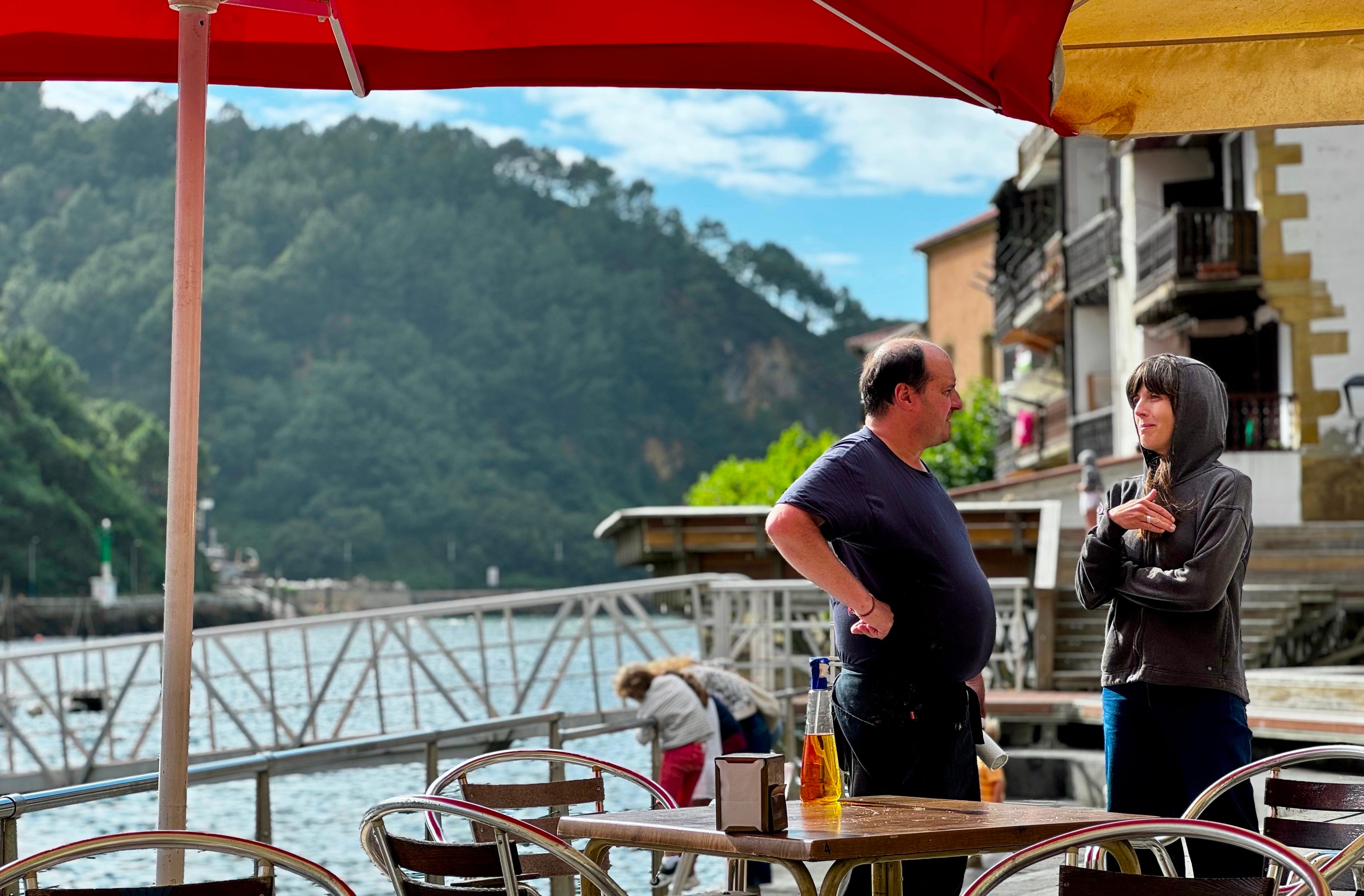
Children scurried around the square with their fingers up like horns, mimicking the bulls that were running just a couple of hours away in Pamplona. A parent corralled half the group behind a set of metal barriers, then released them to chase the others. As I watched the game and kept an eye on my own children dancing on a wooden stage near the water, the chef came up beside me. I asked where he lived, and he pointed to a green section in the multi-colored patchwork building across the square. We talked about the weather, how climate change is making this rainy region drier and he never served food outside when he first opened his restaurant, not even in summer. I cannot now recount any other details, only that five minutes speaking entirely in Spanish felt like 15. That I sweated through the whole thing even though the day was cool. And that I made many mistakes.
But we still understood each other.
//
My 4-year-old son often says slightly incorrect but adorable things like “Sissy fell me down!” or “Is that bee going to die me?” It is a humbling reminder that this is how I probably sound in Spanish: intelligible but clearly not proficient. (Coincidentally, I also have trouble with the verbs “to kill” and “to die,” forever mixing up matar and morir.) And when I look through my daughter’s second-grade worksheets at dinner, I’m amused by the parallels of our language development. Write five sentences describing what’s happening in a photo. Use transitions in your storytelling. Today I [simple present tense verb]; yesterday I [simple past tense verb].
Maybe the delight I get from Spanish is something akin to the joy of childhood. Free to explore and experiment. Make mistakes, fumble a conversation. Pick a word that works, even if it isn’t the absolute most precise or poetic option, and move along.
By midlife, most of us have spent years or even decades pursuing mastery of something. Dedicated to a profession or parenthood, perhaps an artform or an athletic endeavor. And if you spend enough time trying to reach your highest potential, then at a certain point, it seems like you should be an expert (or at least feel like one). I, for example, thought by age 42 I would feel like a more legitimate writer, someone who didn’t hedge when asked, “You’re a writer, aren’t you?” That’s because I tell myself this story that you have to publish a book to be a true writer. Sometimes this pressure to achieve can suck all the pleasure out of something. Extinguish the spark we had at the beginning.
//
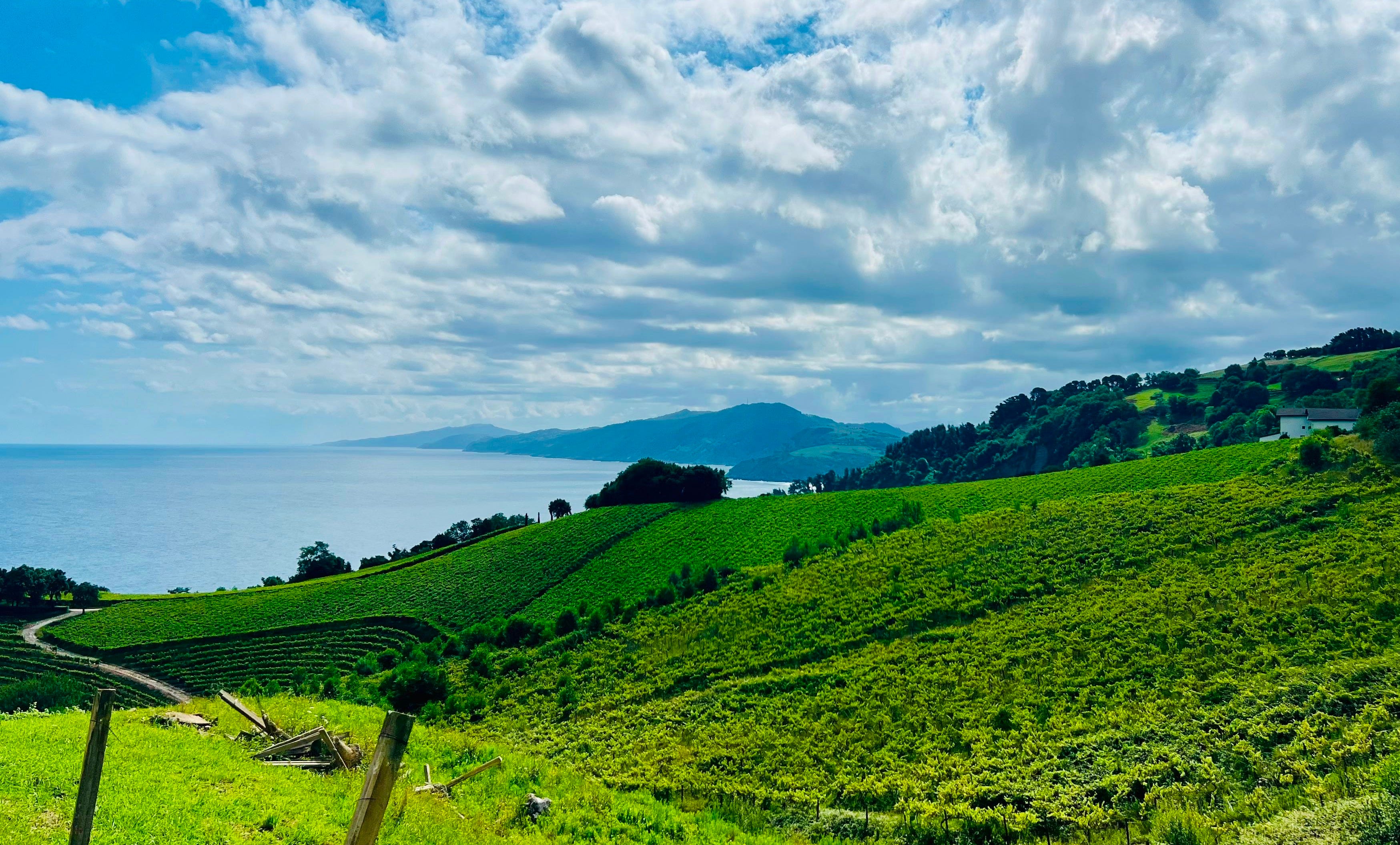
Near the end of our trip, we took one last pilgrimage, this time to the winery that makes our favorite txakolina (“tx” = “ch”!), a slightly sparkling Basque wine. From our sunny terrace perch, the soothing, undulating rows of grapevines sloped to meet the turquoise sea. A lovely sommelier conjured crayons and coloring sheets for our kids, filled our glasses, and began explaining the unique txakolina production process.
Engaging in small talk in a second language is one thing, but the technical lingo of viticulture and enology? I don’t even know the English terminology, much less the Spanish equivalents. The sommelier’s English presentation was clearly challenging—I could practically see her brain working to reproduce what she could no doubt say perfectly in Spanish. I saw it because I’d been doing it all week, and in that moment on the other side, I realized I didn’t care about her mispronunciations (college for “colleague,” geest for “yeast”) or her imperfect syntax (“and then the geest, it becomes death”).
“I’m studying Spanish and there is no way I could talk about wine like you do,” I told her afterward. Her poised professionalism broke into a relieved smile. Learning a language requires immense courage and vulnerability because you don’t just have to believe in yourself—you need faith in others to be kind listeners.
A friend of mine who is from Ecuador graciously humors my Spanish. When I text her, I really think my message out, revising and looking up words. Try as I might, I can’t totally kill my perfectionism, and I’m always following up with apologetic messages like the one I sent the other day: “I feel like I messed up on that sentence.” My friend never corrects me. “It’s fine,” she wrote back instead. “Imagine how I feel every time I write or speak in your language. It’s humbling. But it’s worse not to risk it.”
Beginnership is an antidote to perfectionism, which is the opposite of risk-taking. And beginner Spanish is a particularly good antidote to my own particular perfectionism because as a writer with an editor’s heart, I am essentially a language perfectionist. I tinker with a piece of writing for months before letting another soul read it, so it is an incredible relief to let down my guard of carefully polished language and just be an unabashed beginner. In conversation, you can only rehearse a sentence in your head for so long before you just have to spit it out. You can’t consult a thesaurus or confirm you’re using the best possible word. You just have to live in the moment and go for it, perfection be damned. Geest instead of yeast. Die me instead of kill me.
//
On our last morning in Spain, en route to the panadería for one last txoko, my daughter stopped us at a vibrant display of Basque wool berets in every conceivable color. A fashionista at heart, she’d been eyeing this new accessory all week. She chose a lilac one and followed me into the shop to buy it. After a quick mental Spanish rehearsal, I asked the shopkeeper if she had one that wasn’t faded from sitting outside in the sun. “Por supuesto!” she exclaimed, producing a fresh lilac beret from under the counter. She cautioned that it was too hot out for this traditional hat of the rainy Basque region, but my daughter insisted on wearing it right away. The word for scissors hovered just out of reach. “¿Cómo se dice…?” I began, making a cutting gesture with my fingers.
“Ah, si, tijeras!” the shopkeeper said, snipping the tag.
“Gracias,” I shrugged. “Soy estudiante.” I am a student. A beginner.
“Hablas bien!” she replied warmly, waving goodbye.
Outside the shop, my daughter and I both clutched our beloved souvenirs to our chests. “She told me I spoke Spanish well!” I gushed to my husband, unable to suppress a ridiculous grin. My daughter pulled on her beret, and on cue, an old man walking by exclaimed approvingly, “Que guapa!” My daughter looked up at me quizzically. “He said you look beautiful,” I whispered. She beamed with pride. So did I.
My Spanish persona revels in small victories. She commits heinous grammatical crimes without ever knowing it. She embraces her confusion and laughs at her mistakes. She is not an alter ego. She is just a beginner. And she might be my best self.


Portlanders! Do you need more poetry in your life? (Hint: Everyone does.) Join me IRL this Sunday to celebrate the launch of my brilliant friend Caitlin Dwyer’s book In the Salt — a poetic exploration of femininity, transformation, power and motherhood. March 1 @ 4:00 @ the Rose City Book Pub. And/or buy her book at your fav independent bookstore!
Thanks for reading Field Notes! A favor: If you know someone who’d like this essay, would you share it with them? Helping me reach more readers is the best way to support my writing.
Great post! Thank you for sharing.
We are heading to San Sebastián in 5 weeks (!!!) and would love to know what the panaderia is called / where to find it and also what winery that is your favorite. Any other must see/do recos?
I love this. And this is my year to be taking back up my Spanish. I sing it often in church and can still read it and pronounce it, but conversation ... ay yi yi.
Today I will get a Spanish picture book from the library. Thank you for that suggestion.